Espanha
Angola: Where Votes Count
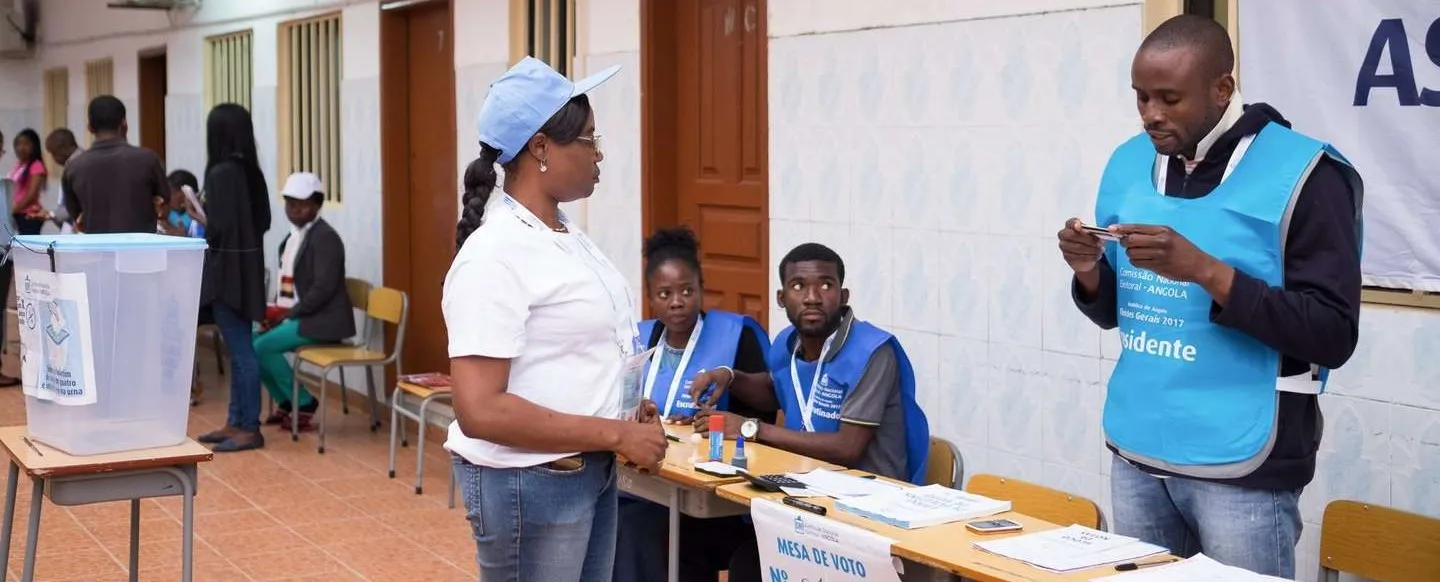
As Angola heads toward its 2027 general election, political debate has become consumed by familiar demands: rewrite the electoral law, replace the National Electoral Commission, invite more international observers. Each proposal is presented as the missing ingredient for a credible election.
They all miss the central issue.
Election integrity depends less on new institutions than on two simple questions: Who votes, and where are the votes counted?
These are not merely technical matters. They determine whether citizens trust the result before it reaches the national authorities.
Much of the discussion in Angola assumes that credibility flows from the top down—that better laws, stronger institutions or foreign observation will produce cleaner elections. Experience suggests the opposite. Public confidence is built from the ground up, beginning at each polling station where ballots are cast, counted and publicly announced.
International observers can help, but they cannot certify every polling station in a country the size of Angola. Their missions are necessarily selective, limited in time and geography. They are no substitute for a transparent counting process that citizens themselves can witness.
The first challenge is determining the electorate itself. Electoral credibility begins long before election day, with accurate voter registration, the proper allocation of polling stations and the transparent distribution of ballot papers.
Angola’s 2024 census deserves far greater attention than it has received. Population shifts are likely to reshape parliamentary representation, particularly in provinces that have grown rapidly over the past decade. Understanding these demographic changes is just as important as monitoring the vote itself. Electoral disputes often begin not with the count, but with uncertainty over who is entitled to vote and where.
The second question is even more important: Where are votes counted?
Centralised counting systems inevitably generate suspicion. This is not an Angolan problem; it is a universal one. Whenever the authority to determine the final result is concentrated in a distant political centre, doubts about transparency become almost unavoidable. Even where no fraud occurs, the perception that results can be altered behind closed doors erodes public confidence.
Decentralisation changes the equation. If ballots are counted where they are cast, in front of party representatives and local communities, manipulating the national outcome becomes exponentially more difficult. Fraud would require altering hundreds—or thousands—of independent counts rather than influencing a single national process.
This is why some of the world’s most competitive democracies rely on highly decentralised electoral systems.
In the United Kingdom, votes are counted and announced constituency by constituency before being aggregated nationally. The legitimacy of the national outcome rests on hundreds of local declarations rather than a single announcement from London. Every constituency produces its own verified result before it becomes part of the national picture.
The United States follows the same principle in a different form. Elections are administered by individual states, not by Washington. Political battles frequently revolve around electoral rules precisely because decentralisation makes nationwide manipulation extraordinarily difficult. Dispersing authority remains one of the strongest safeguards against electoral abuse.
Ironically, Angola has already taken an important step in this direction.
Reforms adopted in 2025 strengthened the role of polling stations by requiring ballots to be counted locally, results to be recorded immediately and official tally sheets to be made available to party representatives before any national aggregation takes place. The law now places far greater weight on the polling station as the foundation of electoral transparency. The first official result is produced where citizens actually vote—not in Luanda. This represents a significant improvement over the previous system, in which the credibility of the election ultimately depended on a centralised tabulation process. Today, the legal architecture is considerably stronger than many critics acknowledge.
That changes the debate entirely.
Angola’s principal challenge is no longer legislative. It is organisational.
Political parties, civil society organisations and citizens should devote less energy to demanding yet another round of institutional reform and more to ensuring that the existing framework functions as intended. Every polling station must be properly staffed. Every ballot paper must be accounted for. Every tally sheet must be independently documented, preserved and transmitted without interference. Every local result must be publicly known before it becomes part of the national total.
Democracies do not earn legitimacy because governments write better laws. They earn legitimacy because citizens can verify that those laws are faithfully applied.
Angola’s 2027 election will not ultimately be judged by the elegance of its legal framework or by the number of foreign observers flown into the country. It will be judged by whether Angolans themselves can see where votes are counted, verify how they are counted and trust that every local result reaches the national tally unchanged.
That is where credible elections begin.
And that is where democracy counts.